Why Mixed Reality Is the Biggest VR Trend of 2026
Mixed reality is becoming one of the most important immersive technology trends of 2026, combining physical spaces with interactive digital content for events, training, marketing and entertainment.
Why Mixed Reality Is the Biggest VR Trend of 2026
Virtual reality is continuing to evolve quickly, but one of the biggest changes in 2026 is that immersive technology is no longer focused only on placing people inside completely digital worlds. The strongest momentum is now around mixed reality: experiences that combine the real environment around a user with interactive digital content that appears to exist naturally within that space.
For businesses, event organisers, educators and entertainment brands, this shift matters because it opens the door to more practical and more flexible immersive experiences. A user can wear a headset, remain aware of the room around them and still interact with digital objects, 3D environments, instructions, games or brand content. Instead of choosing between the physical world and a virtual one, mixed reality brings the two together.
This makes the technology especially relevant for live events, product demonstrations, training, exhibitions and activations. It can turn an ordinary venue, retail space, office or training room into an interactive environment without needing to build a permanent physical installation.
What Mixed Reality Means in Practice
Mixed reality sits between traditional virtual reality and augmented reality. Virtual reality typically replaces the user's view with a fully digital environment, while augmented reality adds simple digital layers to a phone screen or smart glasses view. Mixed reality goes further by allowing digital content to understand and respond to the physical space around the user.
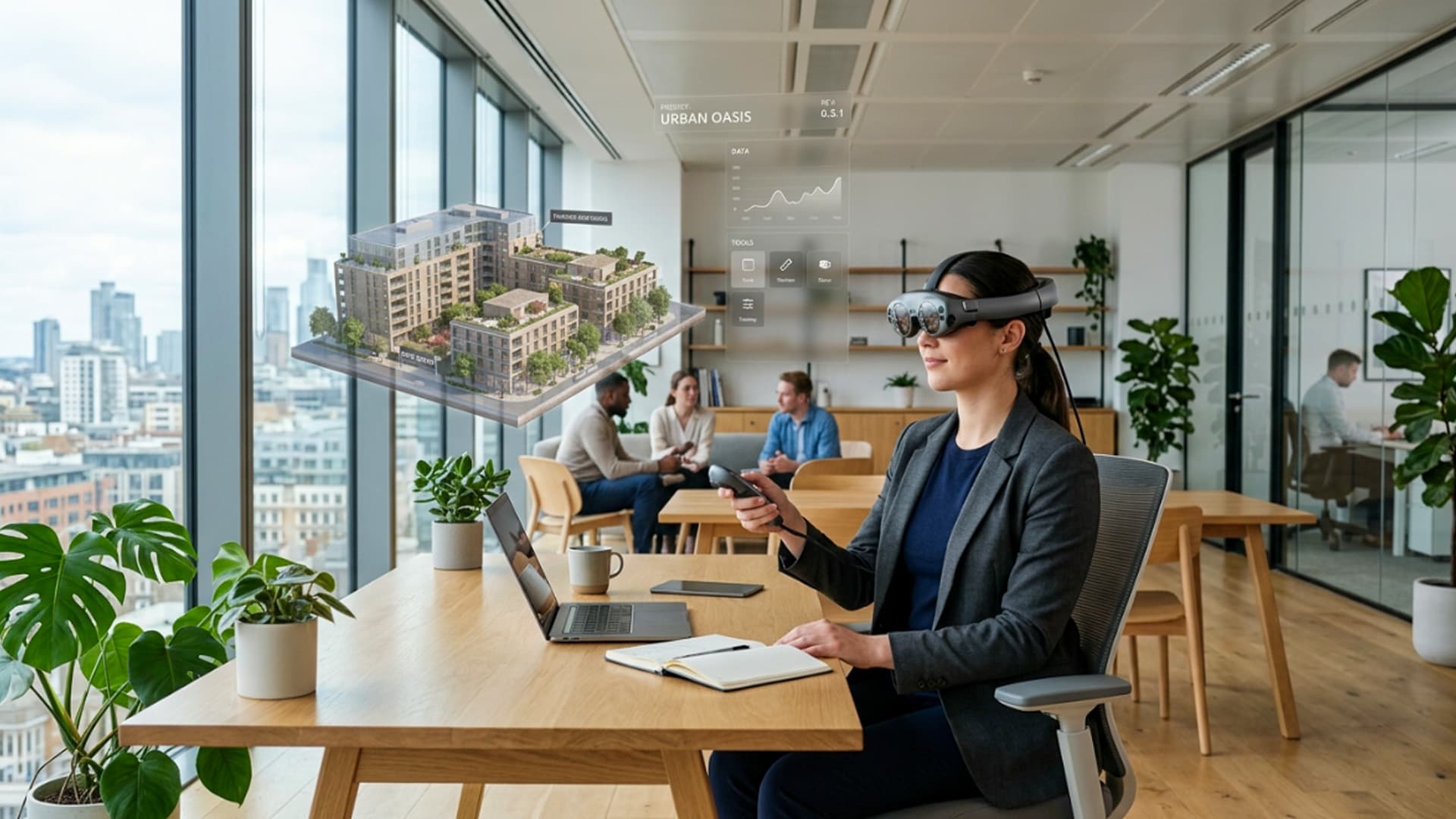
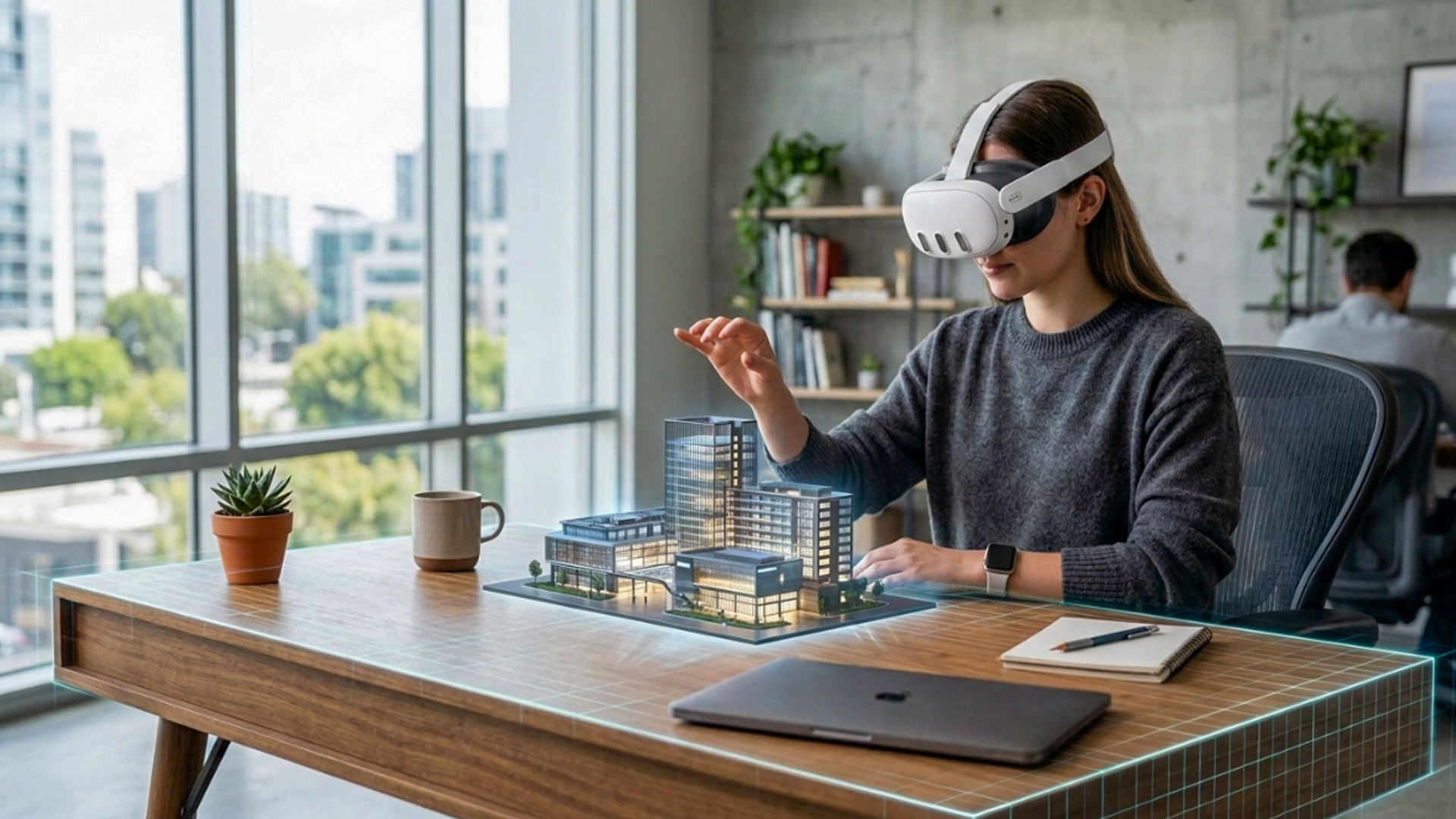
A mixed reality headset can map walls, floors, tables and open areas in a room. This allows a digital object to appear on a real table, a virtual character to move around a physical space or an interactive display to remain in the same place while the user walks around it. The experience feels more believable because the content is connected to the environment rather than floating randomly in front of the user.
For example, a property developer could use mixed reality to show a future building model in a sales office. A visitor could walk around the digital structure, view different layouts and see how materials or finishes may look at real scale. A training team could place virtual equipment into a real workshop and guide staff through a process step by step without taking machinery out of service.
From Headset Demo to Useful Business Tool
Earlier VR demonstrations often focused on the novelty of entering a digital world. That remains valuable for gaming and entertainment, but businesses increasingly need immersive technology to solve practical problems. They need experiences that explain a product clearly, train people safely, attract visitors to an event or make a complex idea easier to understand.
Mixed reality is well suited to these needs because it does not require a business to recreate every part of the real world digitally. A real venue can become the starting point for the experience, while virtual content adds the layers that would be expensive, impossible or impractical to build physically.
This approach can also make activations more memorable. Guests are not simply watching a video or reading a display board. They can move through the experience, interact with content and discover information at their own pace. That level of participation creates stronger engagement and gives people a reason to share the experience with others.
Why Spatial Awareness Changes the Experience
The key feature behind mixed reality is spatial awareness. The headset uses cameras and sensors to understand the environment, helping digital objects appear in the correct position and scale. A virtual product can sit on a real counter, a digital game can use the walls of a venue as part of its environment and an instructional overlay can point directly at the physical component a user needs to work on.
This creates a more natural interaction model. Users do not need to imagine how a product might look in their space because they can see it placed there. They do not need to rely only on written instructions because the system can guide them visually. They do not need a separate purpose-built VR room because a familiar physical setting can become part of the experience.
Mixed Reality for Events and Brand Activations
Events are one of the most exciting applications for mixed reality in 2026. Brands are looking for ways to create experiences that stand out in busy venues where guests are surrounded by screens, banners and competing messages. Mixed reality can turn a standard exhibition stand, shopping centre space or corporate event into an interactive attraction that people actively want to explore.
A brand activation can use headsets to reveal a digital world layered over the physical event space. Guests might discover a virtual product launch, take part in an interactive challenge, explore a branded story or compete with friends in a shared game. The physical environment still provides the social energy of the event, while the digital layer adds surprise, interaction and storytelling.
For companies hosting conferences or product launches, mixed reality can also make presentations more engaging. Rather than showing a product only through slides, presenters can bring a life-size 3D model into the room. Attendees can examine details from different angles, see internal components or view demonstrations that would be difficult to stage physically.
Shared Experiences Create Better Engagement
One of the strongest opportunities is the ability to create shared mixed reality experiences. Rather than placing one person alone in a headset, multiple participants can take part in the same activity. This works particularly well for team-building events, exhibitions, product launches and entertainment activations.
Shared experiences encourage conversation and create a sense of occasion. People compare what they see, work together to complete a task or compete in a game that uses the real venue as part of the experience. For event organisers, this creates more energy than a passive display and gives visitors a stronger reason to spend time at an activation.
The format is also flexible. A small indoor space can become a virtual adventure zone, an automotive showroom can become an interactive design studio and a conference venue can become a collaborative presentation environment. The physical footprint remains manageable while the digital experience can be much larger and more ambitious.
Making Brand Stories More Interactive
Mixed reality gives brands a way to move beyond static advertising. Instead of telling people about a product, companies can let people explore it. A vehicle brand could allow visitors to view different configurations, colours and interior options around a real vehicle. A tourism brand could place visitors inside an interactive destination preview. A property company could reveal a future development directly over a scale model or real site plan.
The strongest activations are not built around technology for its own sake. They use the technology to make a brand message easier to understand, more entertaining or more personal. When people are able to control part of the experience, they are more likely to remember it after the event ends.

Training, Education and Workplace Applications
Mixed reality is also becoming increasingly important for training. Many industries need employees to understand complex equipment, follow detailed processes or respond correctly in situations where mistakes can be costly. Traditional training methods can be effective, but they often rely on manuals, classroom sessions or limited access to physical equipment.
With mixed reality, trainees can see digital guidance placed directly over the real environment. A system can highlight a component, show the next step in a process or simulate a situation before it happens in real life. This makes training more visual and practical while allowing learners to build confidence through repetition.
For industries such as manufacturing, logistics, construction, healthcare and engineering, this can be especially useful. Workers can learn procedures in the same kind of environment where they will eventually apply them. The training remains immersive without removing the important context of the real workplace.
Turning Complex Instructions Into Visual Guidance
Long instruction documents can be difficult to follow when someone is working with unfamiliar equipment or completing a technical task. Mixed reality can make that information easier to use by presenting it visually at the moment it is needed.
Instead of stopping to read a manual, a technician could see a digital overlay that identifies the correct component and explains the next action. Instead of trying to imagine a process from a diagram, a trainee could watch a three-dimensional demonstration positioned directly in front of them.
This does not replace expert knowledge or proper safety procedures. It supports them by making information more accessible and easier to apply in context. For businesses, that can improve consistency, reduce uncertainty and make training sessions more engaging.
Education That Uses the Real World as a Canvas
In education, mixed reality can help students connect abstract subjects with physical surroundings. A classroom can become a place where students inspect a life-size 3D model, explore a historical reconstruction or view a scientific process from different angles.
The value is not simply that the content looks impressive. Students can move around an object, discuss it with others and learn through interaction. This is particularly useful for subjects where scale, structure and movement are difficult to communicate through flat images alone.
Museums, visitor centres and public exhibitions can use the same approach. A physical display can become the foundation for a deeper digital story, giving visitors the choice to explore extra layers of content without overwhelming the space with text panels or screens.

The Role of AI in the Next Stage of Immersive Technology
Artificial intelligence is becoming an important part of the mixed reality conversation in 2026. AI can help systems understand objects, interpret spaces and create more responsive experiences. Rather than using the same fixed content for every person, an immersive application can eventually adapt based on user choices, skill level or the environment around them.
For a training experience, this could mean providing more guidance to a beginner while allowing an experienced user to move through a process more independently. For an event activation, it could mean changing the content based on how visitors interact with the experience. For a virtual tour, it could mean offering more relevant information depending on the areas a visitor chooses to explore.
AI also has the potential to speed up content creation. Building high-quality 3D environments and interactive experiences still requires planning, design and technical skill, but AI-assisted workflows can help teams create variations, prepare assets and personalise content more efficiently.
Personalised Experiences Without Losing the Human Element
Personalisation is useful when it makes an experience more relevant rather than more complicated. A visitor at an event may want a quick, entertaining interaction, while a technical trainee may need detailed guidance. Mixed reality systems can be designed to support both types of users without forcing everyone through the same journey.
The most effective experiences will still need strong creative direction. Technology can make content more responsive, but the story, purpose and usability of the experience remain essential. A good mixed reality activation should feel intuitive from the first moment a user puts on the headset.
For businesses in Durban and across South Africa, this creates an opportunity to develop immersive experiences that are both visually impressive and commercially useful. Whether the goal is customer engagement, employee training, tourism promotion or product demonstration, the focus should remain on giving people a clear reason to interact.
What This Trend Means for Durban Businesses
Durban has a strong mix of tourism, retail, hospitality, property, events and industrial activity, all of which can benefit from immersive technology. Mixed reality is not limited to global technology companies or large international venues. It can be adapted for local events, sales environments, training programmes and visitor experiences.
A hotel or tourism business can use immersive previews to help visitors understand a destination before they book. A property developer can show future spaces before construction is complete. A retail brand can create a temporary activation that attracts attention in a shopping centre. A corporate team can use immersive training to make technical or safety information easier to understand.
The technology is becoming more accessible, but the quality of the experience still matters. A successful project needs a clear objective, well-designed content and a practical plan for how people will use it. The strongest mixed reality projects are those that combine technical capability with a useful, enjoyable and easy-to-understand experience.
Choosing the Right Immersive Format
Not every project needs the same type of technology. A short event activation may need a fast, visually striking experience that works for many guests in a limited time. A training project may need more detailed interaction and repeatable scenarios. A virtual tour may need high-quality visuals and simple navigation that can be accessed from multiple devices.
The right format depends on the audience, the location and the outcome the business wants to achieve. By starting with those practical questions, organisations can choose an immersive solution that delivers value rather than simply adding technology to an existing campaign.
Mixed reality is gaining momentum because it makes virtual content feel more connected to real life. In 2026, that connection is becoming one of the most important directions for virtual reality, creating new opportunities for brands, educators, event organisers and businesses ready to build experiences people can genuinely step into.
Author: Elisha Roodt
Sharing the best of Virtual Reality Durban with local VR experiences, events, and immersive tech insights from Durban and KwaZulu-Natal.